


 简体中文
简体中文





-
چگونه سیستمهای استخراج دود کیفیت هوا و ایمنی کارگران را بهبود میبخشند؟
مقدمه در محیط های صنعتی، کیفیت هوا و ایمنی کارگران نگرانی های اصلی هستند. وجود آلاینده های موجود در هوا مانند گرد و غبار، دود و دود می تواند عواقب جدی هم برای سلا...
-
چرا سیستم کنترل گرد و غبار شما ضعیف است؟ در اینجا چیزی است که شما می توانید انجام دهید
مقدمه الف سیستم کنترل گرد و غبار برای حفظ کیفیت هوا و تضمین ایمنی کارگران در صنایعی مانند فولادسازی، تولید برق، تولید سیمان و فرآوری شیمیایی ضروری ا...
-
مروری جامع بر فیلترهای رسوب دهنده الکترواستاتیک مرطوب WESP برای تصفیه گازهای زائد
فیلتر رسوب دهنده الکترواستاتیک مرطوب WESP چیست؟ الف فیلتر رسوب دهنده الکترواستاتیک مرطوب WESP یک سیستم تصفیه هوای پیشرفته است که برای حذف موثر آلاین...
-
ارتقای رسوبدهنده الکترواستاتیک: آنچه باید بدانید
رسوب دهنده الکترواستاتیک s (ESP) قطعات ضروری در صنایعی هستند که کنترل آلودگی هوا در اولویت است. آنها به طور موثر گرد و غبار ریز و ذرات معلق را از جریان گاز حذف می ک...
پیمانکار هودهای جمعآوری گرد و غبار صنعتی
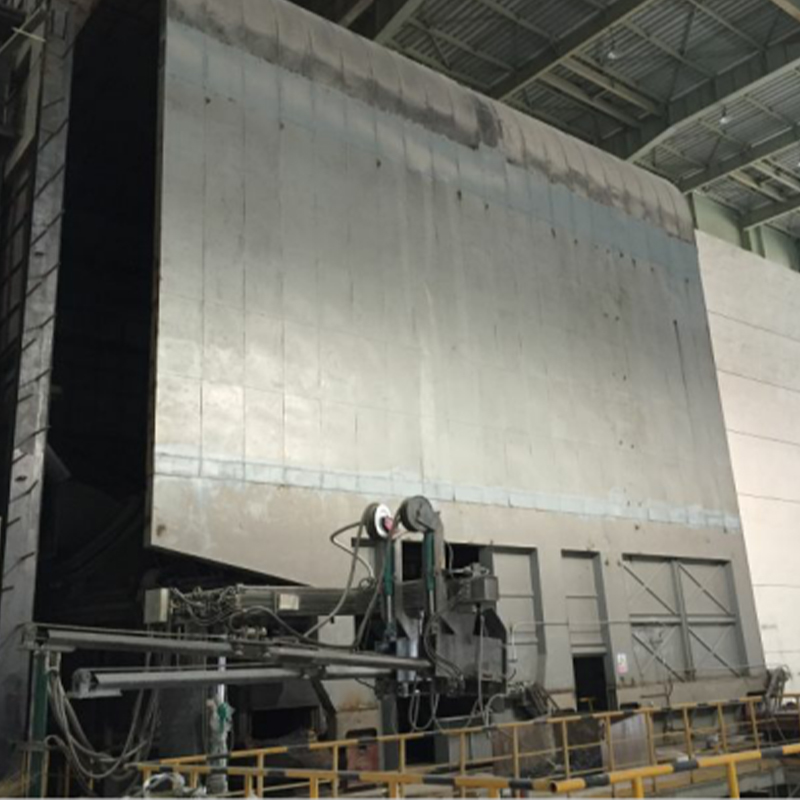
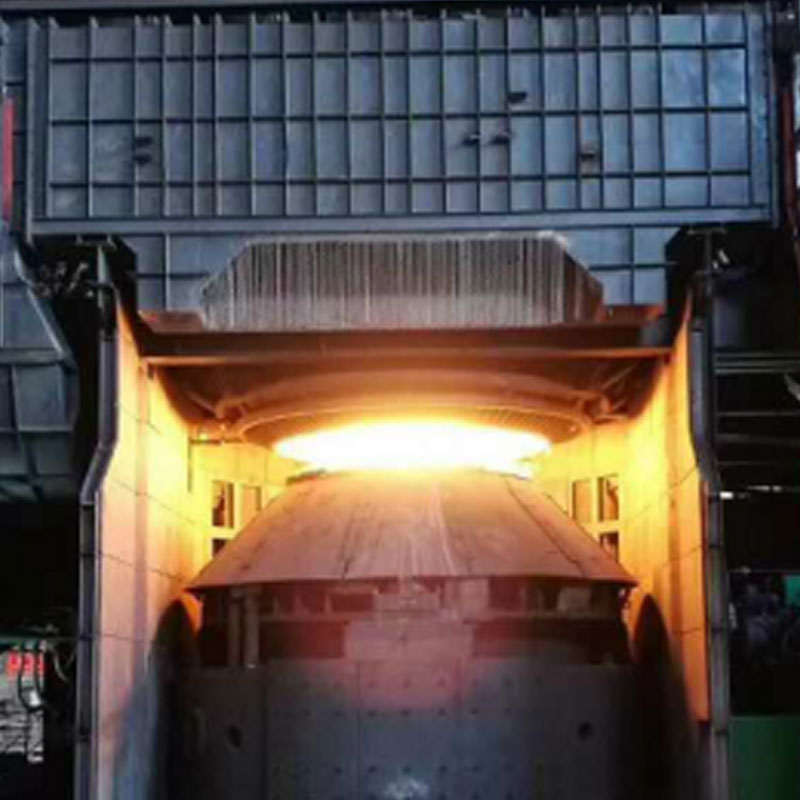
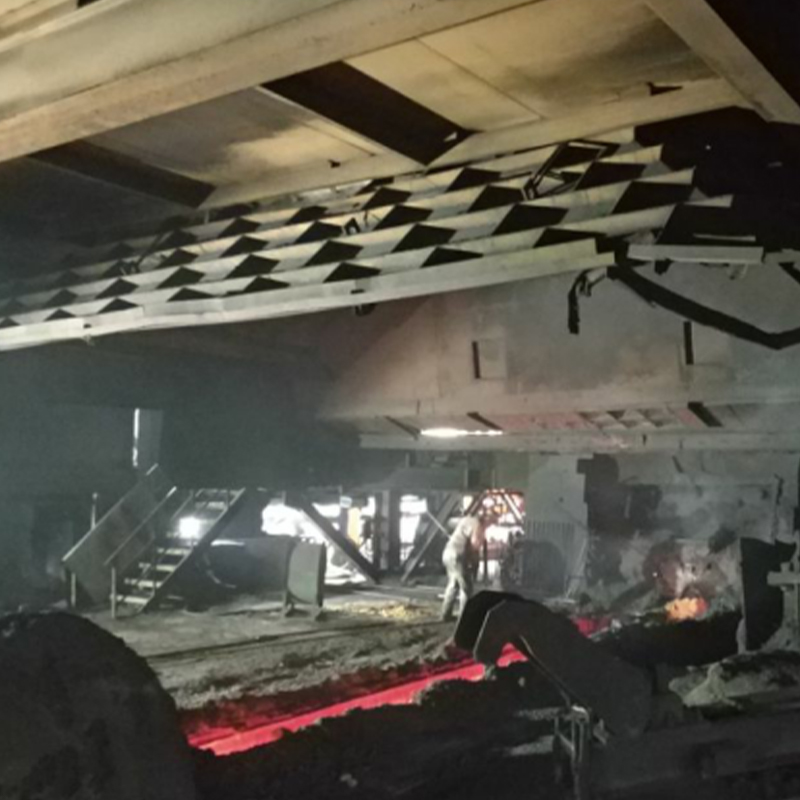
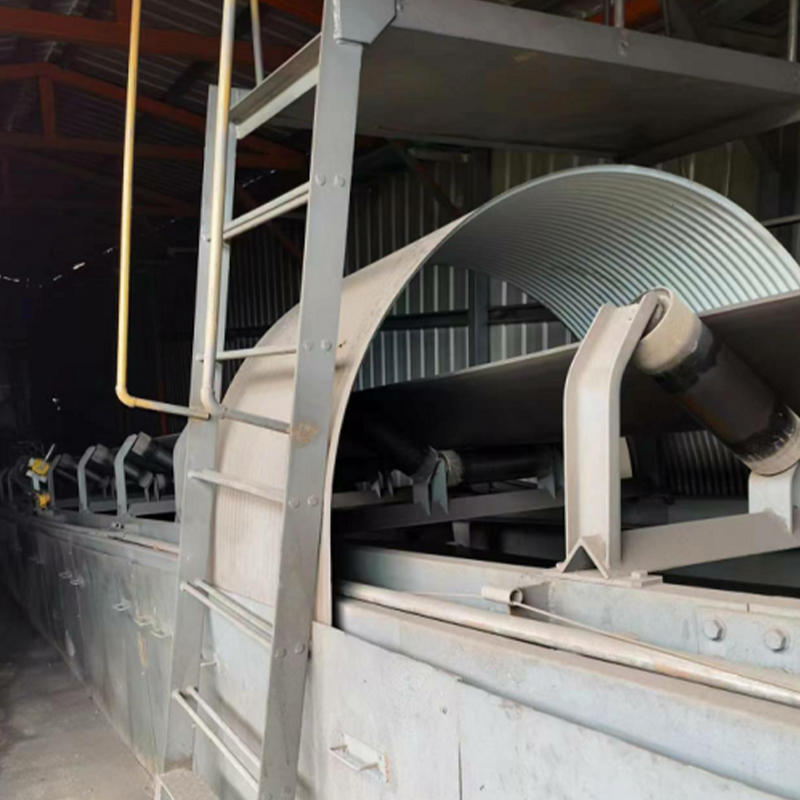
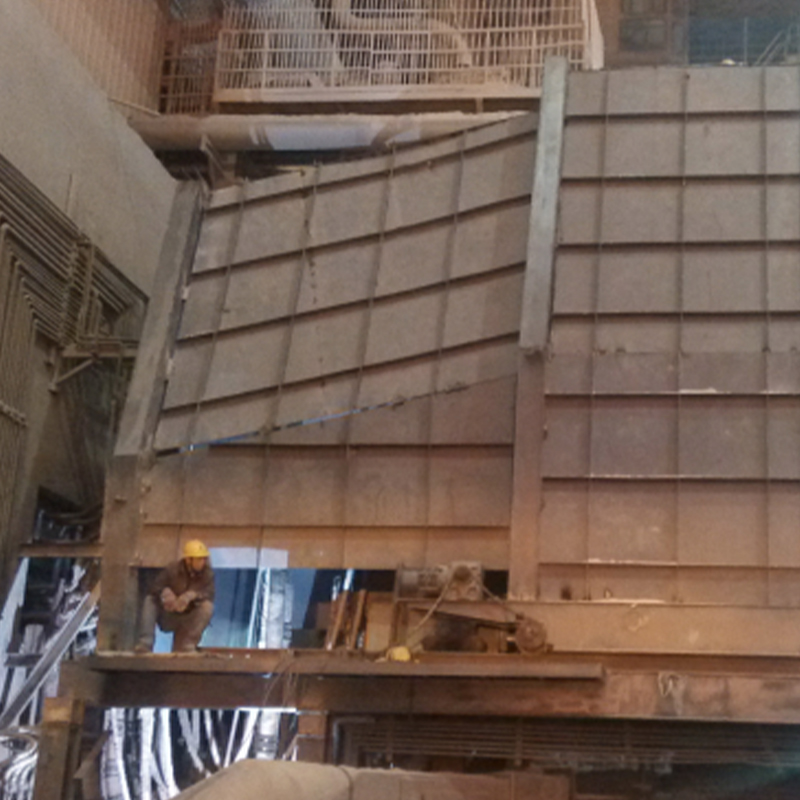
انواع مختلفی از هودهای کلکسیونی وجود دارد. هودهای جمع آوری مختلف با توجه به شرایط کاری مختلف و نقاط مختلف تولید گرد و غبار طراحی می شوند. انواع هودهای جمع آوری رایج شامل هودهای ثابت، هودهای متحرک و هودهای چرخشی هستند. وظیفه اصلی آن این است که دود تولید شده توسط نقطه تولید گرد و غبار را در اسرع وقت به داخل هود جمع آوری کند تا از سرریز شدن و پخش شدن آن جلوگیری کند.
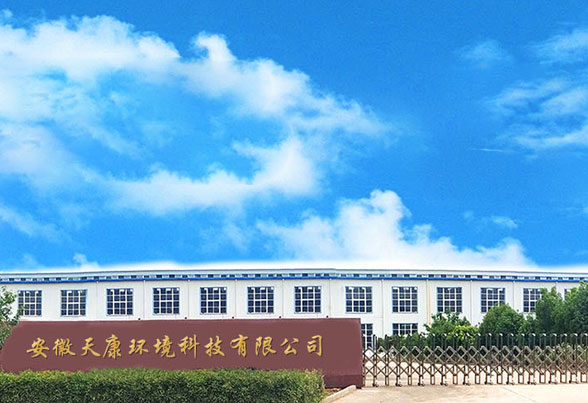
معرفی شرکت
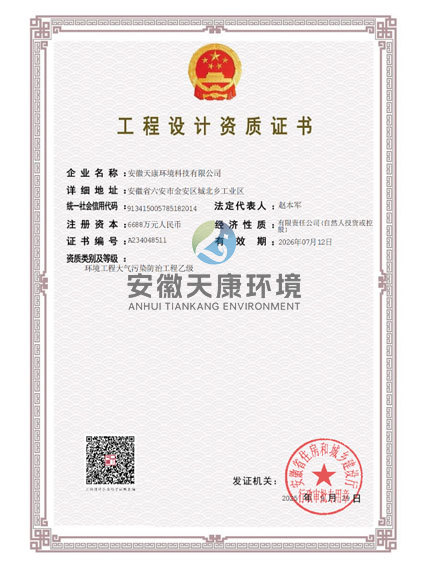
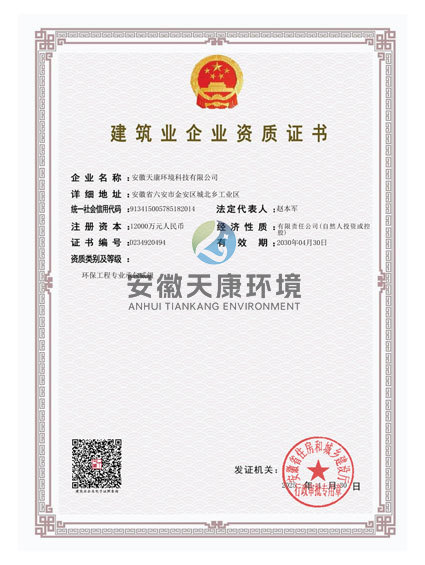
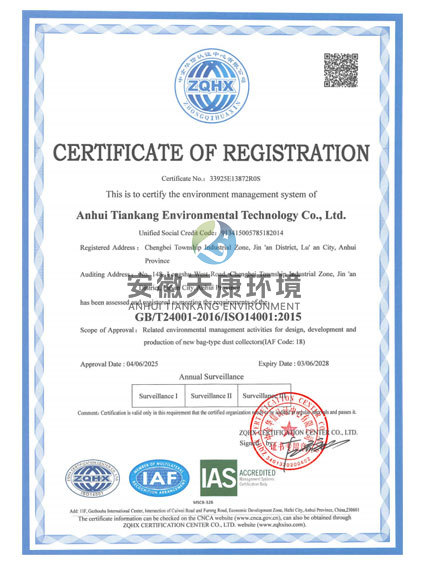
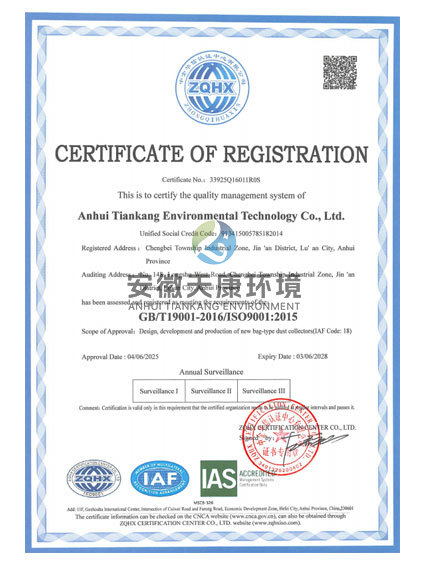
شرکت Anhui Tiankang Environmental Technology Co., Ltd. (که قبلاً به نام Wuxi Mingtian Environmental Protection Equipment Co., Ltd. شناخته میشد) در سال ۲۰۰۲ تأسیس شد. این یک شرکت خصوصی با فناوری پیشرفته است که به حفاظت و مدیریت محیط زیست اختصاص دارد. این شرکت عمدتاً در زمینه طراحی مهندسی محیط زیست، بهرهبرداری از تأسیسات حفاظت محیط زیست و تحقیق و توسعه فناوری کنترل آلودگی محیط زیست فعالیت میکند و اجرای پروژههای مختلف شامل سیستمهای جمعآوری گرد و غبار، سیستمهای حذف دیاکسید گوگرد و نیتروژن و سیستمهای VOC و سایر پروژههای پیمانکاری کلی مهندسی را بر عهده دارد. ما هستیم کارخانه هودهای جمعآوری گرد و غبار صنعتی سفارشی و چین پیمانکار هودهای جمعآوری گرد و غبار صنعتی, در حال حاضر، محصولات این شرکت شامل سیستمهای مختلف جمعآوری گرد و غبار کیسهای (شامل مواد اولیه، بچینگ، گندلهسازی، تفجوشی، آهنسازی، فولادسازی، نورد و سایر جنبههای کارخانههای فولاد؛ صنعت ریختهگری، صنعت داروسازی، صنعت شیشه، صنعت سیمان، صنعت ذوب فلزات غیرآهنی و غیره)، سیستم بازیابی گاز دودکش حذف گرد و غبار اولیه مبدل، سیستم تصفیه سرباره، سیستم تصفیه VOC (شامل دستگاه جذب کربن فعال، دستگاه احتراق کاتالیزوری، پیشتصفیه RTO و UV + جذب چرخ زئولیت + دستگاه RCO و غیره)، و همچنین مبدل حرارتی گاز دودکش، کولر، هود جذب (شامل هود کاملاً محصور کوره الکتریکی، هود سقفی، هود جلو و عقب مبدل، دریچه تخلیه کوره بلند، هود اسکیمر سرباره، هودهای کمربندی مختلف و هودهای نقطهای پراکنده مختلف در کارگاه فولادسازی و غیره)، شیارهای تهویه سیار، صدا خفهکنها، برجهای گوگردزدایی، تجهیزات انتقال خاکستر، جبرانکنندههای انعطافپذیر مجرای تهویه، تکیهگاههای کشویی خط لوله، تخلیهکنندههای میعانات، کیسهها، کیلها و سایر لوازم جانبی سفارشی میشود.
شرکت Tiankang Environment دو شعبه دارد. یکی Wuxi Mingtian Environmental Protection Equipment Co., Ltd. است که در ووکسی، شهری مشهور در جنوب رود یانگتسه با اقتصادی توسعهیافته و مناظری زیبا واقع شده است. این شهر دارای حمل و نقل راحت و مناظر طبیعی و فرهنگی غنی است. دیگری Anhui Tiankang Environmental Technology Co., Ltd. (که قبلاً Anhui Mingtian Energy Saving and Environmental Protection Engineering Co., Ltd. نام داشت) است که در لوآن، یک پایگاه قدیمی انقلابی با تاریخچه طولانی، کوهها و آب و هوای مطبوع واقع شده است. شرکت صمیمانه دوستان از تمامی اقشار جامعه را به بازدید و راهنمایی با روی باز خوشآمد میگوید. این شرکت مایل است خدمات فنی به تمامی اقشار ارائه دهد و صحنهای برای افرادی با آرمانهای بلند فراهم کند تا خرد و استعدادهای خود را به نمایش بگذارند.
این شرکت بر آینده تمرکز دارد، مصمم به حفاظت از محیط زیست است و بازگرداندن آسمانی تازه، آبی و صاف به بشریت را هدف خود میداند!

اخبار و رویدادها
سیستم استخراج دود (FES) دانش صنعتی
How do industrial FES fume extraction systems compare to traditional ventilation methods?
Industrial air quality management is critical for worker safety, regulatory compliance, and operational efficiency. Two primary approaches dominate this field: traditional ventilation methods (e.g., general dilution ventilation, local exhaust systems) and advanced industrial FES (Fume Extraction Systems).
1. Understanding Traditional Ventilation Methods
Traditional ventilation relies on broad airflow management, including:
- Dilution Ventilation: Mixes contaminated air with fresh air to reduce pollutant concentrations.
- Local Exhaust Ventilation (LEV): Uses hoods and ducts to capture contaminants at the source.
While these methods are widely implemented, they often suffer from inefficiencies, such as high energy consumption, incomplete pollutant capture, and difficulty handling high-toxicity or high-volume emissions.
2. Industrial FES Fume Extraction Systems: Core Principles
Industrial FES fume extraction systems represent a technological evolution, combining targeted capture with advanced filtration. Key components include:
- High-efficiency dust collection hoods (fixed, mobile, or rotating) designed for specific emission points.
- Adaptive airflow control to optimize suction based on real-time demand.
- Integrated filtration technologies (e.g., bag filters, activated carbon adsorption, catalytic oxidation).
Unlike traditional systems, FES solutions prioritize source capture, minimizing pollutant dispersion while reducing energy waste.
3. Comparative Analysis: FES vs. Traditional Ventilation
3.1 Capture Efficiency
- FES Systems: Utilize precisely engineered dust collection hoods to enclose emission points (e.g., electric furnace hoods, converter hoods, tapping port hoods), achieving >95% capture rates.
- Traditional LEV: Often struggles with fugitive emissions due to inadequate hood design or airflow imbalances.
3.2 Energy and Operational Costs
- FES Systems: Use variable-frequency drives (VFDs) and demand-based extraction, cutting energy use by 30–50% compared to constant-volume traditional systems.
- Dilution Ventilation: Requires excessive airflow to meet safety thresholds, increasing HVAC loads.
3.3 Flexibility and Adaptability
- FES Systems: Modular designs allow customization for industries like steelmaking (sintering, pelletizing), pharmaceuticals, or cement.
- Traditional Methods: Rigid ductwork and static hoods limit reconfiguration for new processes.
3.4 Compliance and Environmental Impact
Modern industrial FES fume extraction systems integrate end-of-line treatments (e.g., RTO, SCR denitrification) to meet stringent emissions standards, whereas traditional systems often require retrofits.
4. Industry Applications and Case Examples
- Steel Industry: Converter primary dust removal systems in FES setups outperform traditional scrubbers in particulate recovery.
- Foundries: Enclosed hoods with FES reduce silica exposure more effectively than canopy hoods.
- Pharmaceuticals: VOC abatement via FES (e.g., zeolite rotor + RCO) ensures solvent recovery without secondary pollution.
5. Technological Integration and Future Trends
Emerging advancements in industrial FES fume extraction systems include:
- IoT-enabled monitoring for predictive maintenance.
- Hybrid filtration (e.g., electrostatic precipitators + baghouses).
- Low-noise mufflers and heat recovery from extracted fumes.
Industrial FES fume extraction systems offer superior efficiency, cost savings, and scalability compared to traditional ventilation. By leveraging precision-engineered dust collection hoods and smart airflow management, they address the limitations of older methods while aligning with global sustainability goals. For industries seeking compliance and long-term operational benefits, transitioning to FES technology is a strategic imperative.
How effective are dust collection hoods in capturing fine particulate matter?
Dust collection hoods are critical components in industrial air pollution control systems, designed to capture and contain fine particulate matter (PM) at emission sources before it disperses into the workplace or environment. Their effectiveness depends on factors such as design, placement, airflow dynamics, and the nature of the dust source. Industries such as steel manufacturing, cement production, pharmaceuticals, and metal smelting rely on these systems to maintain air quality and comply with environmental regulations.
Anhui Tiankang Environmental Technology Co., Ltd, as a high-tech enterprise specializing in environmental protection solutions, emphasizes the importance of tailored dust collection hood designs for different industrial applications. Their expertise in dust removal systems, including various hood types such as fixed, mobile, and rotating hoods, highlights the necessity of optimizing capture efficiency based on specific working conditions.
The Role of Dust Collection Hoods in Industrial Ventilation
Dust collection hoods serve as the first line of defense in industrial ventilation systems by capturing airborne particles at their source. Their primary function is to contain and direct contaminated air into ductwork, where it can be filtered or treated before release. The efficiency of a hood depends on its ability to generate sufficient airflow to overcome particle dispersion forces, such as thermal buoyancy or mechanical agitation.
Different hood designs are employed based on the dust generation mechanism. Enclosed hoods, for example, are used in high-emission processes like electric arc furnace operations, where fugitive dust must be fully contained. Partial hoods, such as canopy or side-draft hoods, are used when full enclosure is impractical, relying on strategic placement and airflow control to capture emissions. The selection of the appropriate hood type directly impacts particulate capture rates.
Factors Influencing the Capture Efficiency of Dust Collection Hoods
The effectiveness of dust collection hoods in capturing fine particulate matter is influenced by several key factors:
- Hood Design and Geometry – The shape and size of the hood must align with the emission source. A well-designed hood ensures optimal airflow patterns, minimizing particle escape. For instance, flanged hoods reduce air entrainment from surrounding areas, improving capture efficiency.
- Airflow Velocity and Volume – Sufficient airflow is required to overcome particle inertia and draw contaminants into the hood. However, excessive velocity can lead to energy waste, while insufficient velocity allows particle escape.
- Placement Relative to the Emission Source – Proximity and orientation significantly affect capture efficiency. Hoods placed too far from the source or at incorrect angles may fail to contain dust effectively.
- Dust Particle Characteristics – Fine particulate matter behaves differently than coarse dust, often remaining suspended longer. Hoods must account for particle size, density, and electrostatic properties.
- Process Variability – Some industrial processes, such as steelmaking or material handling, generate intermittent or fluctuating dust emissions. Adjustable or mobile hoods may be necessary to adapt to changing conditions.
Common Types of Dust Collection Hoods and Their Applications
Different industrial processes require specialized hood designs to maximize particulate capture. The following table summarizes common hood types and their typical applications:
| Hood Type | Description | Common Applications |
|---|---|---|
| Fixed Hoods | Permanently installed, often enclosing dust sources completely or partially. | Steelmaking (tapping stations, converters), cement kilns, pharmaceutical mixing. |
| Mobile Hoods | Adjustable or movable to accommodate changing emission points. | Welding operations, material transfer points, maintenance activities. |
| Rotating Hoods | Designed to follow moving or rotating emission sources. | Ladle metallurgy, rotary kilns, conveyor belt transfer points. |
| Canopy Hoods | Overhead capture, relying on thermal or buoyant airflow. | Furnace operations, drying processes, paint booths. |
| Side-Draft Hoods | Lateral capture, often used when overhead access is restricted. | Grinding, sanding, machining operations. |
Each hood type has distinct advantages depending on the dust generation mechanism. For example, fully enclosed hoods in steelmaking prevent fugitive emissions during tapping, while mobile hoods in welding operations allow flexibility in capturing intermittent fumes.
Challenges in Capturing Fine Particulate Matter
Despite advancements in hood design, capturing fine particulate matter remains challenging due to its tendency to remain airborne and disperse easily. Key challenges include:
- Aerodynamic Behavior – Fine particles (PM2.5 and smaller) follow air currents rather than settling, requiring precise airflow control.
- Process Interference – Some industrial operations, such as material dumping or pneumatic conveying, generate sudden bursts of dust that may overwhelm static hoods.
- Worker Accessibility – Enclosed hoods may hinder operational efficiency, leading to compromises in design that reduce capture effectiveness.
- Maintenance and Wear – Accumulated dust on hood surfaces can disrupt airflow, reducing efficiency over time.
To mitigate these challenges, modern dust collection systems integrate real-time airflow monitoring, automated hood adjustments, and secondary filtration to ensure consistent performance.
Industry-Specific Considerations
Different industries face unique dust control requirements, necessitating customized hood solutions:
- Steel Industry – Processes like sintering, blast furnace tapping, and converter operations generate heavy dust loads, requiring robust, high-capacity hoods with heat resistance.
- Cement and Glass Manufacturing – High-temperature emissions and abrasive dust necessitate durable hood materials and efficient cooling mechanisms.
- Pharmaceuticals – Hygienic, easy-to-clean hood designs are critical to prevent cross-contamination.
- Non-Ferrous Metal Smelting – Toxic fumes demand tightly sealed hoods with secondary filtration to prevent worker exposure.
Anhui Tiankang Environmental Technology Co., Ltd’s experience in these sectors underscores the importance of industry-specific engineering in dust hood design. Their solutions incorporate patented technologies to enhance capture efficiency while maintaining operational flexibility.
Technological Advancements and Future Trends
Innovations in dust collection hood technology focus on improving energy efficiency, adaptability, and smart monitoring. Emerging trends include:
- Computational Fluid Dynamics (CFD) Modeling – Used to simulate airflow and optimize hood placement before installation.
- Self-Adjusting Hoods – Automated systems that modify airflow based on real-time dust emission levels.
- Low-Energy Designs – Hoods that maximize capture efficiency while minimizing power consumption.
- Integrated Filtration – Combining hoods with advanced filtration media to enhance fine particulate retention.
These advancements aim to address both environmental regulations and operational efficiency, ensuring dust collection systems remain effective in increasingly stringent regulatory landscapes.
Dust collection hoods play a vital role in controlling fine particulate matter across industrial applications. Their effectiveness depends on proper design, placement, and maintenance, with industry-specific considerations ensuring optimal performance. While challenges such as fine particle dispersion and process variability persist, technological advancements continue to improve capture efficiency. Companies specializing in environmental engineering, such as Anhui Tiankang Environmental Technology Co., Ltd, contribute to these improvements through tailored solutions and innovative designs. As industries evolve, dust collection hoods will remain a cornerstone of air pollution control, safeguarding both worker health and environmental compliance.
استعلام

یک شرکت فناوری پیشرفته که به حفاظت و مدیریت محیط زیست اختصاص دارد


اطلاعات تماس
- تلفن: +86-0510-88766689
- واتساپ: +86-18115232326
- ایمیل: [email protected]
- Add: منطقه صنعتی شهرک چنگ بی، منطقه جین آن، شهر لوآن، استان آنهویی، چین

